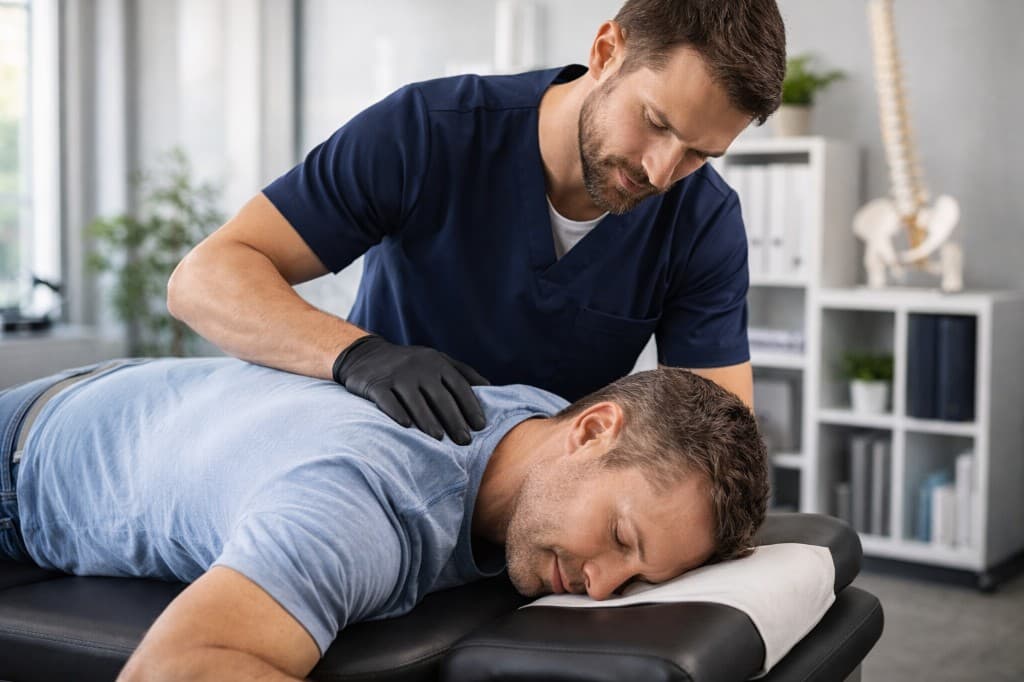
Rock Climbing Shoulder and Spine Rehabilitation in Boulder, Colorado
Specialized chiropractic care for Boulder climbers with rotator cuff strain, thoracic pain, and finger tendon overload from indoor and Flatirons outdoor climbing.
- Climber-specific protocols
- Shoulder mechanics focus
- Finger and wrist care

What Is Rock Climbing Shoulder and Spine Rehabilitation?
A rehabilitation program combining chiropractic adjustments to the thoracic spine and shoulder girdle with soft tissue treatment for the rotator cuff, forearm flexors, and cervical spine strained by rock climbing loads.
Why Choose Harmony Chiropractic for Rock Climbing Shoulder and Spine Rehabilitation
Why Choose Us
Harmony Chiropractic serves a large portion of Boulder's climbing population and understands the grading expectations and training cycles climbers face. We do not tell climbers to simply stop climbing - we build recovery plans around their actual training schedule and target grade goals.
Common Rock Climbing Shoulder and Spine Rehabilitation Scenarios
Rotator Cuff Strain from Overhang Work
Sustained pulling on steep overhanging routes at the gym or the First Flatiron overloads the supraspinatus and infraspinatus, producing deep shoulder pain with overhead reaching.
Thoracic Kyphosis and Mid-Back Pain
Climbers who train heavily on vertical and slab routes develop excessive thoracic rounding and midback tightness that limits scapular movement and shoulder range of motion.
Forearm Flexor Overuse and Elbow Pain
High-volume crimping on small holds creates forearm flexor tightness that progresses to medial elbow pain and reduced grip endurance during longer outdoor routes.
Our Rock Climbing Shoulder and Spine Rehabilitation Process
Climbing-Specific Movement Screen
We test shoulder internal and external rotation, thoracic extension, and scapular stability to map which mobility deficits are increasing your injury risk on the wall.
Thoracic and Cervical Spine Adjustment
Restoring thoracic extension and cervical joint mobility reduces the compensatory shoulder strain that develops when the upper back cannot extend during overhead climbing movements.
Rotator Cuff and Forearm Soft Tissue Treatment
Instrument-assisted release and manual myofascial work on the rotator cuff muscles and forearm flexor tendons reduces inflammation and breaks down the scar tissue restricting mobility.
Antagonist Strengthening and Load Management
We prescribe finger extensor and external rotator strengthening drills and provide a route volume reduction plan calibrated to your current injury stage and recovery timeline.
Rock Climbing Shoulder and Spine Rehabilitation - Frequently Asked Questions
Often yes, with modifications. We typically recommend reducing overhang volume and avoiding dynamic moves while adding antagonist training. Complete rest is rarely the best answer for Boulder climbers with competitive goals and active training partners.
Mild to moderate rotator cuff strains in active climbers generally improve substantially in four to eight weeks with consistent chiropractic care and load management. Full return to projecting-level intensity may take ten to twelve weeks depending on initial strain severity.
Yes. A2 and A4 pulley sprains are extremely common in Boulder's climbing population. We treat the associated forearm mechanics and provide graded finger loading protocols while coordinating with your training to minimize fitness loss during recovery.
Sustained scapular protraction and thoracic flexion during climbing fatigues the rhomboids and lower trapezius, causing joint compression in the mid-thoracic spine. Chiropractic mobilization of the thoracic facets and soft tissue release relieves this common post-session pain pattern efficiently.
SERVICE AREAS
Rock Climbing Shoulder and Spine Rehabilitation Near You
Harmony Chiropractic provides rock climbing shoulder and spine rehabilitation throughout Boulder and surrounding communities.
Related Sports Injury Rehabilitation Services